
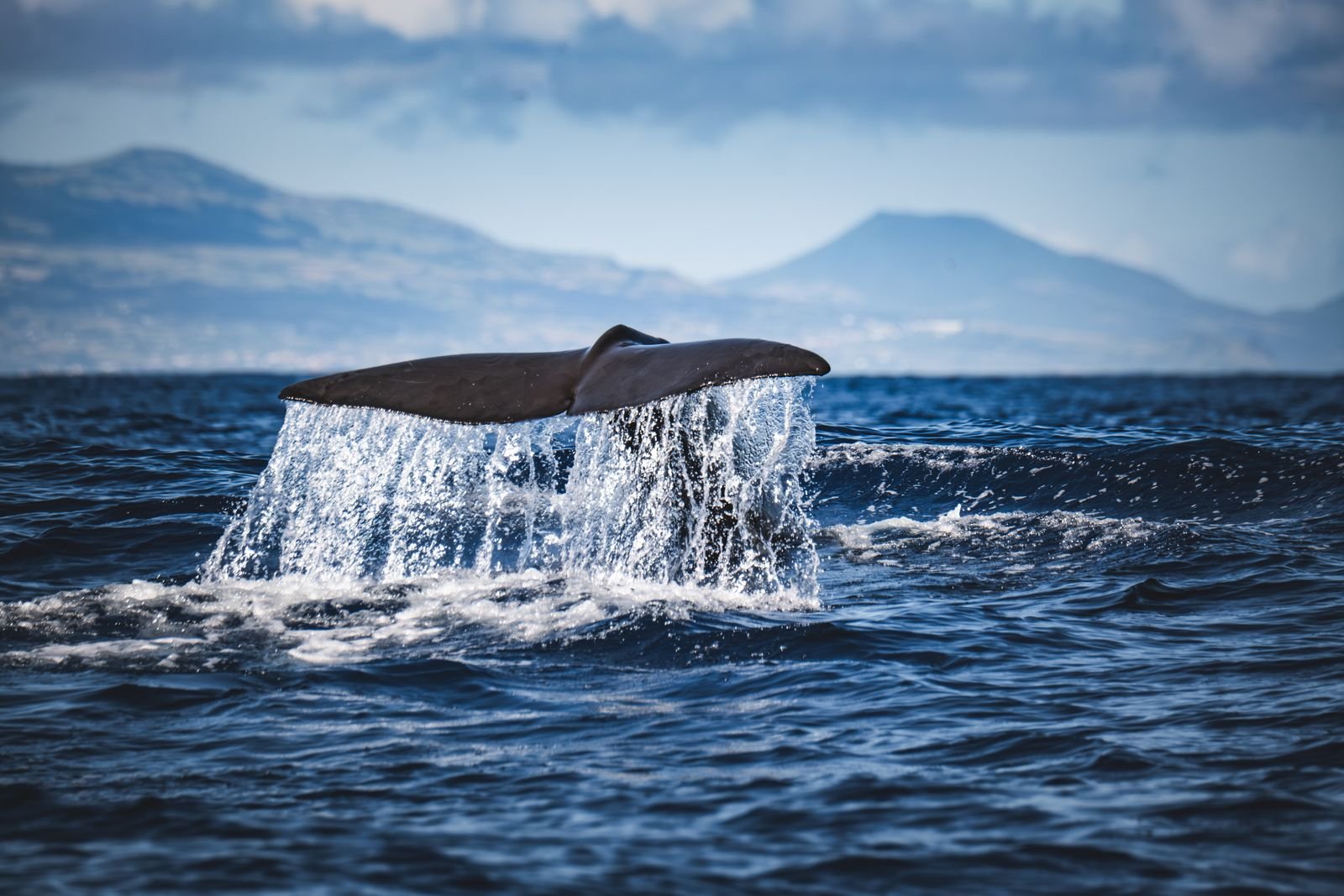
Whale watching in Europe doesn’t require a trip to the other side of the world: from the Azores to Norway, by way of the Mediterranean, the Strait of Gibraltar and Scotland, European waters are home to sperm whales, fin whales, orcas and humpbacks. You just need to know where to go, when to go, and how to pick a trip that doesn’t disturb the animals.
Whale watching has two sides. Done well, it supports coastal communities, funds research and inspires thousands of visitors. Poorly managed, it stresses the animals, disrupts their feeding and can even lead to collisions. This guide will help you make the right choices, destination by destination.
Why responsible whale watching matters
Great whales play a major ecological role, which we explain in our article on the overlooked role of whales: they fertilize the ocean, store carbon and shape the entire ecosystem. Yet many species remain vulnerable to ship strikes, fishing gear and underwater noise.
The International Whaling Commission, which publishes a global whale watching handbook, points out that a boat that gets too close or stays too long changes how the animals behave: shorter dives, interrupted rest, mothers separated from their calves. Engines also add noise, a topic we cover in our feature on ocean noise pollution. A well-chosen trip keeps all of these effects to a minimum.
The best places for whale watching in Europe
The Azores: Europe’s top destination
In the middle of the Atlantic, Portugal’s Azores archipelago is widely seen as one of the best whale watching spots in Europe. Sperm whales are there year-round, and spring brings migrating baleen whales, including the blue whale, the largest animal on Earth. Most trips leave from Pico, Faial and São Miguel.
A local quirk: operators still work with lookouts, or vigias, posted on the cliffs, a legacy of the old whaling industry that ended in the 1980s. These spotters pick out blows from shore and guide the boats by radio, so skippers don’t have to crisscross the sea at random.
Madeira and the Canary Islands
Farther south, Madeira offers sightings all year, with dolphins on almost every trip and regular visits from sperm whales and baleen whales. In the Canaries, the channel between Tenerife and La Gomera hosts resident populations of short-finned pilot whales and bottlenose dolphins. The activity is regulated by the regional government, so choose boats that clearly display their permit.
The Mediterranean and the Pelagos Sanctuary
Stretching between the French Riviera, Corsica, Liguria and Tuscany, the Pelagos Sanctuary was created by an agreement signed in 1999 by France, Italy and Monaco. It’s the part of the Mediterranean where you’re most likely to spot the fin whale, the second-largest animal in the world, as well as sperm whales, pilot whales and several dolphin species. The best season runs from June to September, when the sea is calm.
The Mediterranean is also where the High Quality Whale-Watching label was born, launched by the ACCOBAMS agreement and the Pelagos Sanctuary. Certified operators commit to a code of conduct, train their crews and share their sightings with scientists. The sanctuary is one of the largest marine protected areas in Europe.
The Strait of Gibraltar
Trips from Tarifa, in Andalusia, meet long-finned pilot whales year-round and sperm whales in spring and summer. In midsummer, orcas come into the strait to hunt bluefin tuna. Researchers monitor this small population closely, so a reputable operator will keep its distance and never chase the pod.
Norway, Iceland, Scotland and Ireland
In northern Norway, around Tromsø and Skjervøy, orcas and humpbacks follow herring into the fjords in the depths of winter, roughly from November to January. Farther south, Andenes in the Vesterålen islands is known for its sperm whales. In Iceland, the harbor town of Húsavík is a summer hotspot for humpbacks and minke whales.
In the British Isles, the Inner Hebrides around the Isle of Mull welcome minke whales in summer. Along Ireland’s south coast, fin whales and humpbacks move closer to shore from late summer into early winter and can sometimes be seen from headlands.
What about France’s Atlantic coast?
Great whales are rare close to France’s Atlantic shores. Offshore, though, the Bay of Biscay is rich in fin whales and beaked whales, which are sometimes spotted from the ferries linking the UK and Spain, where the British charity ORCA runs scientific surveys. Closer to the coast, you’re far more likely to meet dolphins, as we explain in our guide on where to see dolphins in France.
When to go: a destination-by-destination calendar
| Destination | Key species | Best time | Good to know |
|---|---|---|---|
| Azores | Sperm whale, blue, fin and sei whales | Year-round for sperm whales, spring for baleen whales | Shore-based lookouts guide the boats |
| Madeira | Dolphins, sperm whale, baleen whales | Year-round | Short trips, often calmer seas than the Azores |
| Canary Islands (Tenerife, La Gomera) | Pilot whale, bottlenose dolphin | Year-round | Pick a licensed boat and skip “party” cruises |
| Mediterranean (Pelagos) | Fin whale, sperm whale, dolphins | June to September | High Quality Whale-Watching certified operators |
| Strait of Gibraltar | Long-finned pilot whale, sperm whale, orca | Spring and summer, orcas in midsummer | Fragile orca population, keep your distance |
| Northern Norway | Orca, humpback, sperm whale | November to January (orcas), summer (sperm whales at Andenes) | Cold and polar night: dress warmly |
| Iceland (Húsavík) | Humpback, minke whale | Summer | Choose electric or sailing boats where available |
| Scotland and Ireland | Minke, fin and humpback whales | Summer (Scotland), late summer to early winter (Ireland) | Land-based watching is possible |
How to choose a responsible whale watching tour
Signs of a good operator
- They explain a code of conduct before departure: slow speed on approach, minimum distance, limited viewing time.
- They never “guarantee” sightings: whales are wild animals, and a 100% promise encourages pushy approaches.
- They have a naturalist guide or biologist on board and share their data with research programs.
- They limit the number of boats around the same group and always leave the animals an escape route.
- They display a label or official permit where one exists in the region.
Big boat, RIB or watching from shore?
Larger boats are steadier and more comfortable if you’re prone to seasickness. RIBs are faster but noisier and bumpier. Sailboats and electric boats, which are becoming more common, are the quietest. And watching from a headland with binoculars disturbs no one at all: it works well in Ireland, Scotland and the Azores.
What to bring
A windproof, waterproof jacket, even in summer, since it’s always windier offshore. Sunscreen and a reusable water bottle. Above all, a good pair of binoculars, such as the Nikon Prostaff 7S 10×42, so you can watch without getting closer.
If you get seasick, acupressure wristbands such as Sea-Band help some people. For medication, ask your pharmacist or doctor before your trip.
Mistakes to avoid
- Booking the cheapest or fastest trip: rock-bottom prices often mean packed boats and aggressive approaches.
- Trying to swim with whales: scientists advise against it, it’s banned in many areas, and it’s risky for both you and the animal. French law, for instance, prohibits intentionally disturbing marine mammals.
- Flying a drone over whales: the noise and shadow disturb them, and drones are often restricted in protected areas.
- Pushing for a closer look: if the animals dive for a long time or change course, it’s a sign to back off.
- Flying in for a quick weekend: when you can, combine the trip with other discoveries or pick a destination you can reach by train and ferry. Our tips for responsible seaside travel will help you shrink your footprint.
FAQ: whale watching in Europe
When is the best time for whale watching in Europe?
It depends on where you go. Spring is ideal in the Azores for the large baleen whales, summer suits the Mediterranean, Iceland and Scotland, and winter is orca and humpback season in northern Norway.
Can you see whales in France?
Yes, mainly in the Mediterranean, in the Pelagos Sanctuary off the French Riviera and Corsica, home to fin whales and sperm whales. On the Atlantic side, great whales tend to stay offshore in the Bay of Biscay.
Where can you see blue whales in Europe?
The Azores in spring offer the best odds, during the migration of the large baleen whales. Blue whales are also reported in some years off northern Iceland in summer, but sightings are never guaranteed.
Does whale watching disturb whales?
It can if it’s done badly: too many boats, too close, for too long. With an operator that follows a code of conduct or holds a label such as High Quality Whale-Watching, disturbance stays limited and the activity contributes to scientific knowledge.
Should you book ahead?
In high season, yes, because reputable operators cap the number of seats. Leave a few spare days on site: when the sea is rough, trips are often postponed, which is actually a good sign.
Conclusion
Whale watching in Europe is within everyone’s reach, from the Azores to the Pelagos Sanctuary and the Norwegian fjords. The key is to pick the right season, choose an operator that puts the animals’ well-being ahead of the show, and accept that an encounter can’t be ordered on demand. Before you go, take a moment to learn why protecting whales matters for the whole ocean.