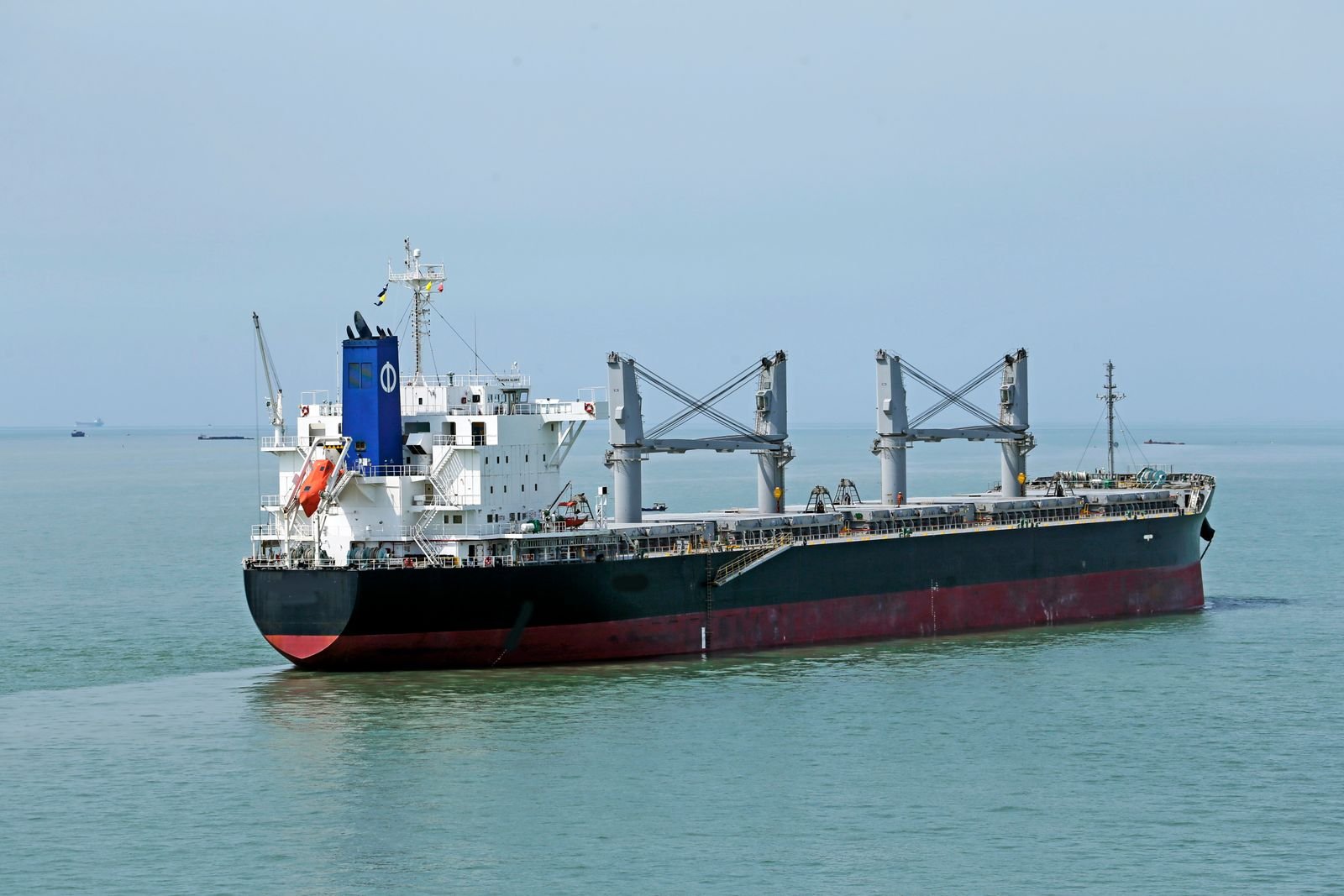
Ship strikes on whales are one of the most underestimated threats to the great whales of the Mediterranean. A ferry or container ship at full speed almost never sees the animal it hits. The whale, for its part, often has no time to dive.
The problem is especially acute between Provence, Corsica, Liguria and the Catalan coast. This is home to fin whales and sperm whales, and it is also one of the busiest shipping areas in the region. The good news: solutions exist, from the simplest (slowing down) to the most innovative (real-time detection, thermal cameras, artificial intelligence).
In this guide, you will learn why these collisions are so common, which technologies help crews avoid them, what the Particularly Sensitive Sea Area status adopted for the northwestern Mediterranean changes, and how you can help, whether you are a passenger or a recreational boater.
Why are ship strikes a major threat to whales?
Great whales spend a lot of time near the surface: to breathe, to rest between dives or to feed on krill. The fin whale, the second-largest animal on the planet, sometimes stays just below the surface for long minutes. That is exactly where it crosses paths with ships.
According to the scientific committee of the Pelagos Sanctuary, collisions are the leading human-caused cause of death for fin whales and sperm whales in this area. WWF France estimates that between 8 and 40 fin whales are killed each year in the northwestern Mediterranean. Many cases go unnoticed: a struck animal often sinks offshore and never washes ashore.
For a population that is already isolated and small, every individual lost matters. Whales reproduce slowly, with one calf every two or three years at best. To better understand their role in the ecosystem, read our article on the ecological role of whales.
Why is the northwestern Mediterranean so exposed?
This basin combines two factors. On one side, upwellings of cold, nutrient-rich water attract whales, especially in summer. On the other, ferry links between the mainland, Corsica, Sardinia and the Balearic Islands, major commercial ports and cruise ships create very dense traffic. According to the French ministry in charge of the sea, the risk of a fin whale collision there is about three times higher than in the rest of the Mediterranean.
Speed is the key factor
Speed changes everything. Pelagos Sanctuary scientists note that below 10 knots, collisions become very rare, and that they are mostly fatal above roughly 13 knots. A slower ship gives the animal time to move away, and the crew time to spot it and maneuver.
Technology solutions to prevent ship strikes
No single tool is enough. The most effective solutions combine detection, information sharing and changes in route or speed.
REPCET: sharing whale positions between ships
REPCET is a French system for reporting whale positions. When the crew of an equipped ship spots a whale, they report its position. The information is relayed to other equipped ships in the area, with an alert zone on their screen. They can then slow down or change course.
The system is used in particular on passenger ships sailing between Corsica and the French mainland. France’s 2016 biodiversity law made a whale-position sharing device mandatory for certain large French-flagged ships crossing some whale sanctuaries, including Pelagos. Its limitation is well known: it only works if a whale has already been seen, and if many ships take part.
Thermal cameras and artificial intelligence
A whale’s blow is warmer than the surrounding air. Infrared cameras installed on the bridge can detect it, even at night, when the human eye sees nothing. Paired with artificial intelligence software, they can tell a blow from a wave or a bird and trigger an alert.
These systems are still being rolled out and validated. Their range depends on the weather and sea state. But they open a promising path for fast ships that cannot rely on visual lookout alone.
Acoustic monitoring and presence maps
Whales communicate and navigate by sound. Hydrophones, fixed or mounted on buoys, pick up their calls and reveal that a group is present in an area. Data gathered by scientists is also used to draw seasonal presence maps, which help plan shipping routes. That same underwater noise is another threat: see our feature on ocean noise pollution.
Onboard observers and crew training
The oldest solution is still effective: a dedicated whale lookout on the bridge. Training officers to recognize a blow, a back or a fin, and to react quickly, reduces the risk. Some ferry companies commit to this under voluntary charters.
Comparing the main solutions
| Solution | How it works | Strengths | Limitations |
|---|---|---|---|
| Speed reduction | Sailing at around 10 knots in high-risk areas | Proven effectiveness, less noise and fuel | Longer crossings, cost for operators |
| REPCET | Sharing whale positions between ships | Simple, already in service in the Mediterranean | Depends on sightings and the number of equipped ships |
| Thermal cameras + AI | Automatic detection of blows | Works at night, continuous watch | Still being tested, sensitive to sea state |
| Hydrophones | Listening for whale calls | Detects animals not visible at the surface | Misses silent whales |
| Rerouting | Avoiding high-density areas | Very effective when areas are stable | Poorly suited when whale presence shifts |
| Trained observers | Dedicated visual lookout | Low cost, complements other tools | Limited at night and in bad weather |
What the Particularly Sensitive Sea Area changes
On July 7, 2023, the Marine Environment Protection Committee of the International Maritime Organization (IMO) adopted a Particularly Sensitive Sea Area, or PSSA, in the northwestern Mediterranean. It runs along the coasts of France, Monaco, Italy and Spain, and includes the Pelagos Sanctuary as well as the Spanish cetacean migration corridor off Catalonia and the Balearic Islands.
This international status officially recognizes the collision risk. It comes with recommendations for ships: reduce speed, keep a sharper lookout, report whale sightings. For now, these measures remain voluntary. Organizations such as the International Fund for Animal Welfare (IFAW) and OceanCare are calling for a mandatory speed limit, pointing out that voluntary measures are often poorly followed.
Elsewhere in the world, experience shows that regulation works. On the U.S. East Coast, seasonal 10-knot limits protect the North Atlantic right whale. In Canada, speed reductions are required in the Gulf of St. Lawrence. Protecting whales also depends on marine protected areas, as long as they actually regulate shipping.
How you can help
If you are a passenger
- Check the ferry company’s commitments: REPCET equipment, speed reduction charter, crew training.
- If you spot a blow or a back from the deck, tell the crew.
- For a cruise, choose lines that are transparent about their measures to protect whales.
If you sail or run a powerboat
- Slow down offshore in summer, especially between the French Riviera, Corsica and Liguria.
- Keep a careful lookout, ideally with a pair of waterproof marine binoculars.
- If a whale is in sight, slow down, never cut across its path and keep your distance.
- Share your sightings with citizen science programs such as the French platform OBSenMER: they enrich presence maps.
A pair of binoculars with moderate magnification, such as the Steiner Navigator Pro 7×50, is well suited to keeping watch at sea.
To see whales without disturbing them, book a trip with a certified operator. Our guide to whale watching in Europe will help you choose.
Mistakes to avoid
- Assuming the whale will move away on its own: a resting or feeding animal sometimes reacts too late.
- Relying on a single technology: every tool has blind spots, so combining them is essential.
- Thinking only large ships are involved: fast boats and pleasure craft can also injure whales.
- Keeping a sighting to yourself: a reported position can prevent a collision a few hours later.
FAQ about ship strikes on whales
Which whales are most affected in the Mediterranean?
Fin whales and sperm whales are the main victims. They spend time at the surface and use the busy shipping areas of the northwestern Mediterranean.
What is the REPCET system?
It is a French system for sharing whale positions. A ship that spots a whale reports it, and other equipped ships in the area receive an alert to slow down or change course.
At what speed does a ship reduce the risk of collision?
Scientists point to a threshold of about 10 knots. Below that, collisions become rare. Above roughly 13 knots, they are usually fatal.
Is slowing down mandatory in the Mediterranean?
Not yet. The Particularly Sensitive Sea Area adopted by the IMO in 2023 comes with voluntary recommendations. Several NGOs are calling for a mandatory speed limit.
What should I do if I see an injured or dead whale?
Do not approach it and alert the maritime rescue services on VHF channel 16 (in France, you can also dial 196 by phone). For a stranded animal on the beach, our article on stranded whales and dolphins explains what to do.
Conclusion
Ship strikes on whales are not inevitable. Slowing down, sharing sightings and equipping bridges with detection tools can save a large share of these animals. The northwestern Mediterranean now has international status to move forward: what remains is turning recommendations into rules everyone follows. To learn more, discover the technologies helping our oceans.