
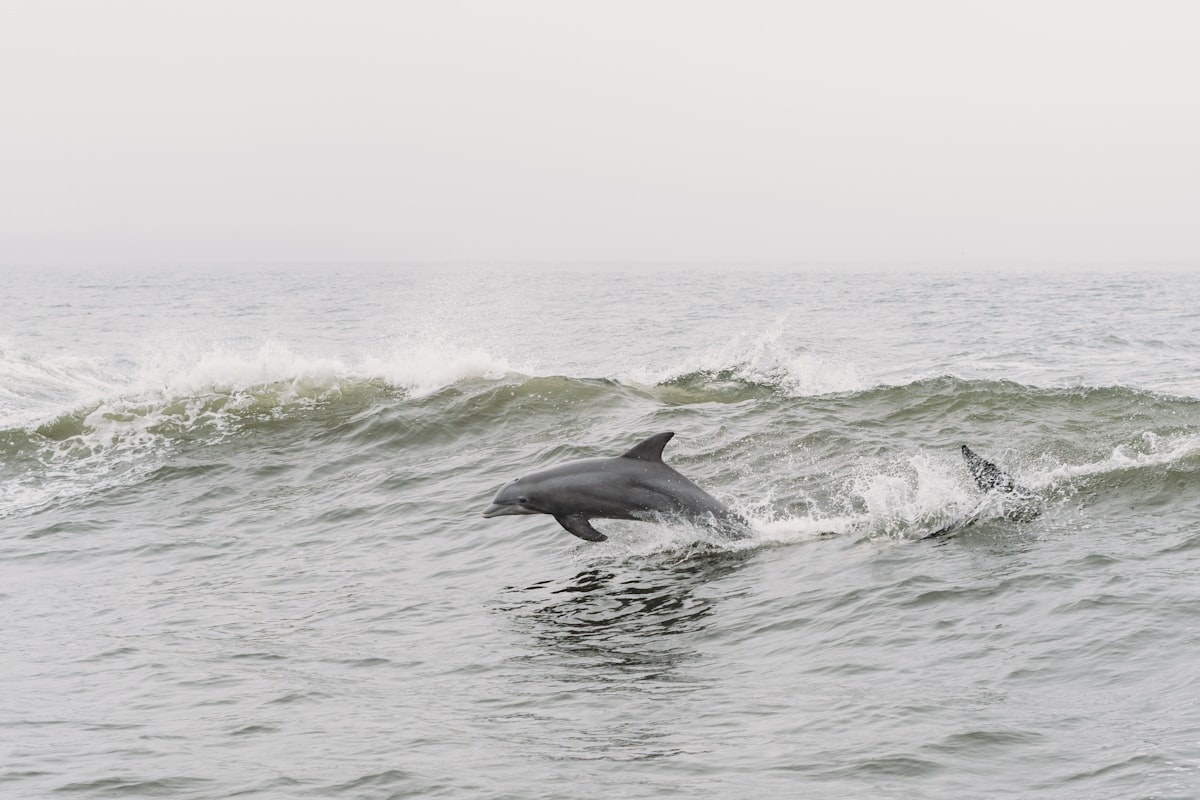
Dolphins in danger: this alarming finding is now a reality documented by scientists around the world. Among the most intelligent animals on the planet, symbols of freedom and marine life, dolphins face threats that grow more intense every year. Fishing nets, chemical pollution, shipping traffic, captures for marine parks: human pressure on dolphins has never been greater. 🐬
Dolphins in danger: an alarming picture
Of the 40 dolphin species recorded worldwide, a large majority are now listed as vulnerable, endangered or critically endangered on the IUCN Red List. Some species are already gone: the Yangtze River dolphin (baiji) was officially declared functionally extinct in 2006, a victim of overfishing, pollution and heavy river traffic on China’s longest river.
The vaquita, a porpoise from the Gulf of California closely related to dolphins, is the most endangered cetacean in the world: fewer than ten individuals are thought to remain. Despite international emergency programs, its survival remains highly uncertain.
Bycatch in fishing nets
Accidental capture in fishing nets is the leading cause of dolphin deaths worldwide. Every year, tens of thousands of dolphins drown in nets that were never meant for them, a problem known as “bycatch.” In the Mediterranean, this pressure is especially heavy on bottlenose and common dolphins.
Pelagic trawls, used to catch tuna and swordfish, are particularly deadly. Some estimates put the toll at more than 300,000 cetaceans (dolphins, porpoises and small whales) dying in fishing nets around the world every year. It’s a staggering figure that remains largely invisible to the public.
Noise pollution: an invisible threat
Dolphins rely entirely on sound to communicate, hunt and find their way using echolocation. Ocean noise pollution (heavy shipping traffic, military sonar, offshore construction) creates a “wall of noise” that severely disrupts these vital abilities.
Active mid-frequency military sonar has been directly linked to dozens of mass strandings. Disoriented by these intense sound emissions, dolphins rise to the surface too quickly, suffering decompression injuries similar to those of divers who ascend too fast.
Chemical pollution: a silent poison
As predators near the top of the marine food chain, dolphins accumulate high concentrations of chemical pollutants in their bodies: PCBs, DDT, heavy metals, endocrine disruptors. This bioaccumulation turns dolphins into living “chemical archives” of ocean pollution.
These substances weaken their immune systems, impair reproduction and shorten their lives. Studies have shown that dolphins off Europe’s most industrialized coasts carry some of the highest PCB levels ever measured in wild mammals, high enough for their bodies to qualify as toxic waste under European regulations.
Protection initiatives that work
Solutions exist, and they have proven their worth. Acoustic pingers, devices attached to fishing nets that emit sound signals to warn dolphins away, can cut bycatch by up to 90%. Making them standard is a priority for many NGOs, but it runs up against resistance from parts of the fishing industry.
Creating stricter protection zones has significantly reduced pressure on some populations. The Pelagos Sanctuary, in the Ligurian Sea, has protected an area rich in cetaceans since 1999. Protected marine corridors are also starting to be established along migration routes.
Organizations such as Sea Shepherd, WWF and Océan Polaris carry out fieldwork, raise awareness and lobby governments to strengthen cetacean protection laws. Their campaigns have won major regulatory advances in several countries.
What you can actually do
Protecting dolphins isn’t just a job for activists or scientists. Choose dolphin-watching operators that respect regulatory distances (such as France’s Éconavigateur label), eat MSC-certified sustainable seafood to ease pressure on fisheries, support marine conservation groups financially, and refuse to visit dolphinariums: every individual choice helps reduce the pressure on these extraordinary animals.
Dolphins are often described as ambassadors of marine life: their presence or absence in our seas is a valuable indicator of the ocean’s overall health. Protecting them means protecting the entire marine ecosystem on which so much of life on Earth depends.
Read also : Where to See Dolphins in France: The Best Spots and Responsible Boat Trips