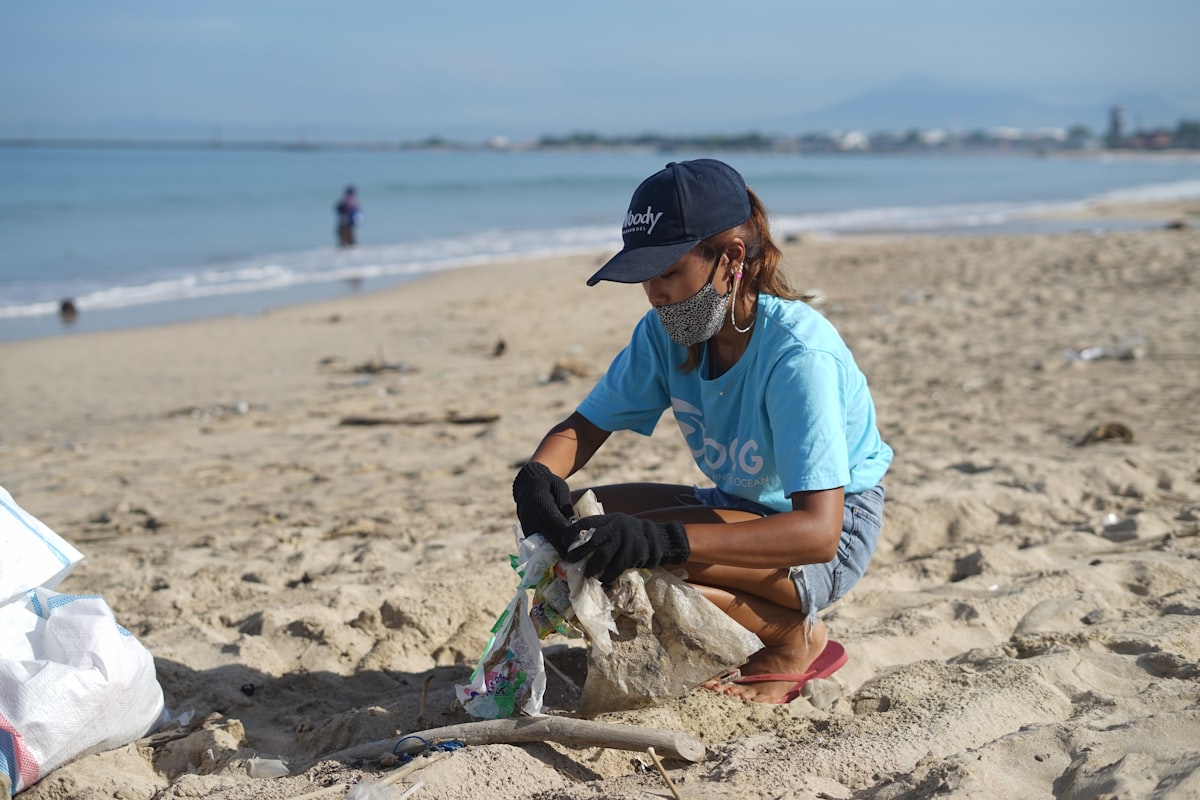
Plastic pollution is now one of the most serious threats facing our oceans. According to the latest scientific estimates, between 8 and 12 million metric tons of plastic end up in the sea every year, the equivalent of a garbage truck dumping its load every minute. 🌊
The scale of plastic pollution in our oceans
At this rate, researchers estimate that by 2050 the oceans could contain more plastic than fish by weight. And the problem isn’t limited to the visible trash washed up on beaches. The vast majority of plastics gradually break apart under UV light and mechanical erosion, forming what are known as microplastics: particles invisible to the naked eye that get everywhere, from the deepest abyss to the lungs of seabirds.
The Great Pacific Garbage Patch
One of the most striking symbols of this pollution is the “Great Pacific Garbage Patch,” a swirl of floating debris located between Hawaii and California. It is estimated to cover more than 1.6 million square kilometers (620,000 square miles), about three times the size of France.
Contrary to what its name might suggest, it isn’t a solid island of plastic, but a soup of microparticles suspended in the top 30 meters (100 feet) of water. In fact, there are five of these gyres across the world’s major oceans.
Devastating consequences for marine wildlife
- More than one million seabirds die directly from plastic every year
- 100,000 marine mammals are killed by suffocation, digestive blockage or entanglement
- Sea turtles routinely mistake plastic bags for jellyfish
- Microplastics have been found in the tissues of virtually every marine organism studied
Where does all this plastic come from?
Most of it, between 70% and 80%, arrives via rivers and streams. The world’s 10 most polluting rivers (8 of them in Asia) are thought to be responsible for more than 90% of the plastic that rivers carry into the oceans.
Emerging solutions
- The Ocean Cleanup: floating barriers that concentrate and collect drifting plastic.
- “Plastic-eating” enzymes: Japanese bacteria capable of breaking down PET in a matter of hours.
- Regulation: in 2021, the European Union banned the most common single-use plastic items.
What everyone can do
Cut back on single-use plastic, buy in bulk, avoid cosmetics containing microbeads, join beach cleanups: every action counts. The oceans have absorbed 30% of human CO₂ emissions since the start of the industrial era. They deserve for us to fight for them.
Read also : Beach Cleanup Guide: How to Join or Organize One