
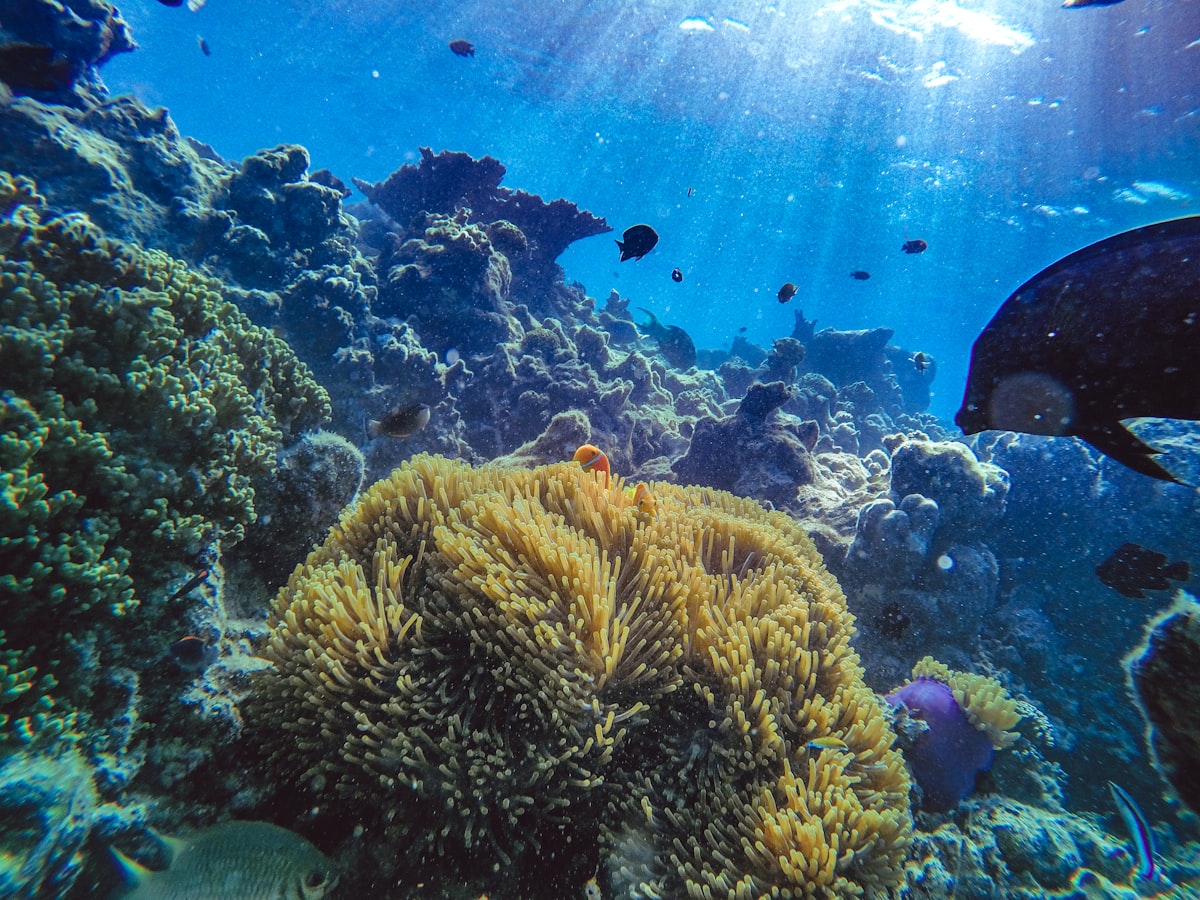
They’re nicknamed the “rainforests of the sea”: coral reefs cover less than 1% of the ocean’s surface, yet they are home to about 25% of all known marine species. And they are disappearing at an alarming rate. 🪸
Irreplaceable underwater rainforests
Reefs shield coastlines from swells and tsunamis, support fisheries that more than a billion people depend on, and generate enormous tourism revenue. Australia’s Great Barrier Reef alone contributes more than $6 billion a year to the local economy.
Bleaching: a silent alarm bell
Coral lives in symbiosis with microscopic algae called zooxanthellae, which provide up to 90% of its energy. When the water temperature rises just 1 to 2°C (1.8 to 3.6°F) above normal, the coral expels its algae, turns white and dies if temperatures don’t return to normal.
Before the 1980s, these episodes were extremely rare. Today they occur every 5 to 6 years — too often for reefs to regenerate between crises.
Acidification, the other invisible threat
CO₂ absorbed by the oceans forms carbonic acid, which lowers the water’s pH. Since preindustrial times, the oceans have become about 26% more acidic, making it increasingly hard for corals to build their limestone skeletons.
Promising restoration initiatives
- Coral gardening — underwater nurseries followed by transplanting onto damaged reefs.
- Super corals — breeding strains that are naturally heat-resistant.
- 3D printing — artificial structures that support recolonization.
- Cryopreservation — an underwater seed bank for corals.
What we can do
Keeping warming below 1.5°C (2.7°F) would save between 10% and 30% of reefs. On a personal level: use “reef-safe” sunscreen (oxybenzone-free), never touch coral when diving, and support marine conservation organizations.