
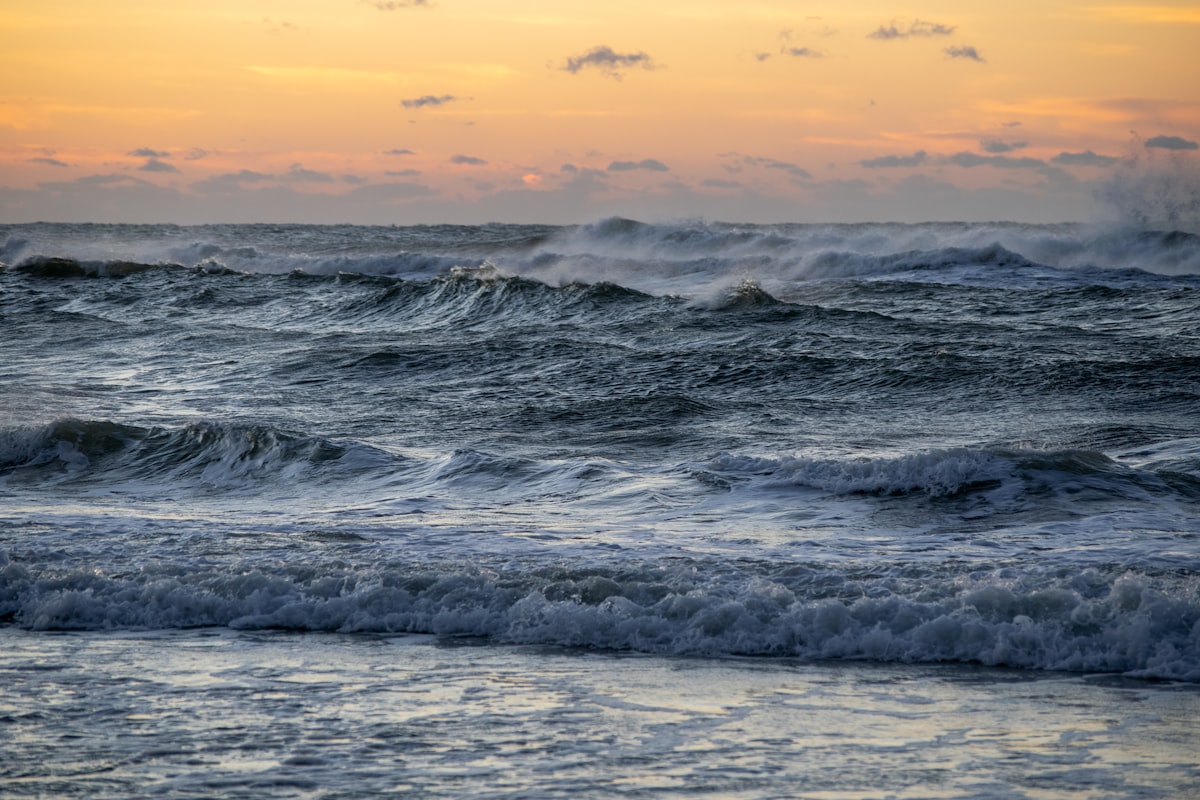
The oceans and climate change are bound together in a relationship of extraordinary complexity and importance. The seas cover 71% of our planet’s surface and act as an absolutely essential climate regulator — a role now deeply disrupted by human activity, with consequences that reach far beyond marine ecosystems alone. 🌍
The oceans and climate change: regulators under pressure
The oceans have absorbed about 90% of the excess heat trapped by the greenhouse effect since the 1970s. Without that massive uptake, the Earth’s average air temperature would be far higher today than it is. The seas have literally “buffered” climate change for decades, at the cost of warming deep into their own waters.
At the same time, the oceans have absorbed about a third of all human CO2 emissions since the industrial era, slowing the buildup of the gas in the atmosphere. But that uptake comes at a price: as we explain in our article on ocean acidification, CO2 dissolved in seawater forms carbonic acid, threatening all shell-building marine life.
Ocean warming and its consequences
Average ocean surface temperatures have risen by about 0.13 °C (0.23 °F) per decade since 1901, but the warming is speeding up: 2015 to 2024 were the hottest years ever recorded in the oceans. This warming has multiple, interconnected consequences for marine ecosystems and the global climate system.
Thermal stratification — the separation between warm surface water and cold deep water — is intensifying, reducing the vertical mixing that brings nutrients up from the depths. The result is a gradual “desertification” of tropical ocean zones, which produce less phytoplankton, the foundation of the entire marine food chain and of the world’s fish resources.
Rising sea levels
Ocean warming drives sea-level rise in two ways: through thermal expansion (warm water takes up more space) and through the melting of land ice, whose runoff flows into the sea. Since 1900, average sea level has risen by about 20 cm (8 in) — and the pace is accelerating, from 1.4 mm a year in the 20th century to more than 3.6 mm a year since the 1990s.
This rise directly threatens hundreds of millions of people living in low-lying coastal areas. Pacific island nations such as Tuvalu and the Maldives could be partly or completely submerged by the end of the century. Major coastal cities — Miami, Bangkok, Amsterdam, Mumbai — are investing billions in flood defenses. Mangroves and other coastal ecosystems provide valuable natural defenses against rising waters.
Disrupted ocean currents
The great ocean currents — such as the thermohaline circulation, or Atlantic Meridional Overturning Circulation (AMOC) — play a fundamental role in regulating the global climate. These currents carry heat from the tropics toward the poles, keeping temperatures livable in regions like Northern Europe, which would be much colder without the influence of the Gulf Stream.
Global warming and melting polar ice are pouring cold fresh water into the North Atlantic, disrupting the water density differences that drive these currents. Recent studies suggest that the AMOC has been slowing for decades and could reach a catastrophic “tipping point” well before the end of the century — with potentially dramatic climate consequences for Europe, West Africa and the Americas.
Solutions: mitigation and adaptation
Meeting these challenges requires two kinds of response. Mitigation — cutting CO2 emissions to limit the scale of the change — is the top priority. Every tenth of a degree of warming avoided means better-preserved marine ecosystems. Green technologies are playing a growing role in this transition.
Adaptation is just as essential to cope with changes already underway. Restoring the coastal ecosystems that protect shorelines, building resilient fisheries and aquaculture, rethinking how coastal areas are developed: all urgent tasks to prepare our societies for a changing ocean. Protecting the oceans is inseparable from fighting climate change — they are two sides of the same challenge.
Read also : Sea Level Rise in France: Which Coasts Are at Risk?