
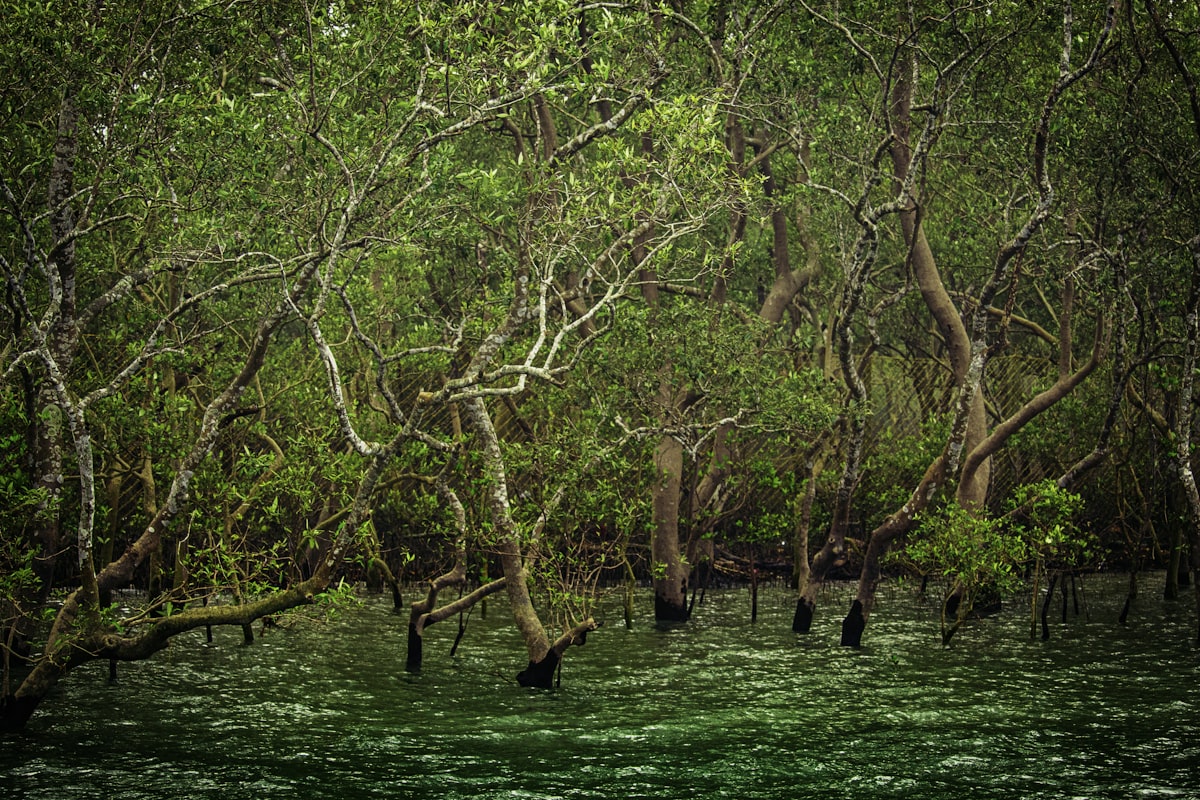
Coastal protection by mangroves is one of the most valuable — and least appreciated — ecological services on the planet. These tropical forests with their tangled roots, growing on the boundary between land and sea, play an irreplaceable role for the climate, for biodiversity and for hundreds of millions of people living along the coast. Yet they keep disappearing at an alarming rate. 🌿
Mangroves, guardians of the coast and the climate
Mangroves provide natural coastal protection against disasters. During the devastating 2004 Indian Ocean tsunami, coastal areas shielded by dense mangroves suffered far less damage than areas where they had been cleared. Their aerial roots and dense structure dissipate the energy of storm waves, reduce coastal erosion and stabilize sediments. A study published in Nature estimated that mangroves protect 18 million people from flooding every year and prevent $65 billion in damage.
On the climate front, mangroves are extraordinary carbon sinks. They store on average four times more carbon per hectare than tropical forests on land — much of it locked in their deep sediments, where it can stay trapped for thousands of years. Destroying them abruptly releases this stored carbon, contributing directly to climate change.
Irreplaceable marine nurseries
Mangroves are essential nurseries for marine life. Their submerged roots form a maze of shelters where the young of many species of fish, shrimp, crabs and other crustaceans grow up. More than 75% of commercial tropical fish species are estimated to spend part of their life cycle in mangroves.
Millions of small-scale fishers in tropical countries depend directly on these ecosystems for their livelihoods. Destroying mangroves therefore invariably leads to the collapse of local fisheries, deepening poverty in the most vulnerable coastal communities.
Alarming deforestation despite the urgency
Despite their vital importance, mangroves have lost more than 35% of their global area since the 1980s. The main culprits are intensive aquaculture — especially shrimp farming for export — coastal development, agriculture and logging. In parts of Southeast Asia, such as the Philippines, Indonesia and Myanmar, losses have reached 70 to 80% in just a few decades.
The paradox is striking: mangroves are cleared to build shrimp farms that, after a few years of intensive use, exhaust the soil and are abandoned — leaving coastal wastelands where rich, protective ecosystems once thrived.
Restoration: evolving methods
Mangrove replanting programs are multiplying around the world with encouraging results. Countries such as Bangladesh, India, Kenya and Mexico have planted millions of mangrove trees with significant success. But restoring mangroves isn’t just about planting trees: the right species must be chosen for each site, tidal water flows restored and local communities involved in long-term management.
Innovative projects use seed-planting drones to plant mangrove propagules in hard-to-reach areas, replanting 10 times faster than by hand. In Indonesia, community projects have replanted more than 10,000 hectares (nearly 25,000 acres) of mangroves by combining carbon revenue with local participation.
Everyday action for mangroves
Everyone can help protect mangroves. Avoid uncertified farmed shrimp (look for the ASC label), support organizations such as the Mangrove Action Project, Wetlands International or the IUCN, and offset your carbon footprint through certified mangrove restoration projects: there are plenty of ways to act.
For too long, mangroves have stood in the shadow of tropical rainforests in conservation discussions. It’s time to give them the place they deserve in the fight against climate change and the protection of marine biodiversity.
Read also : Sea Level Rise in France: Which Coasts Are at Risk?