
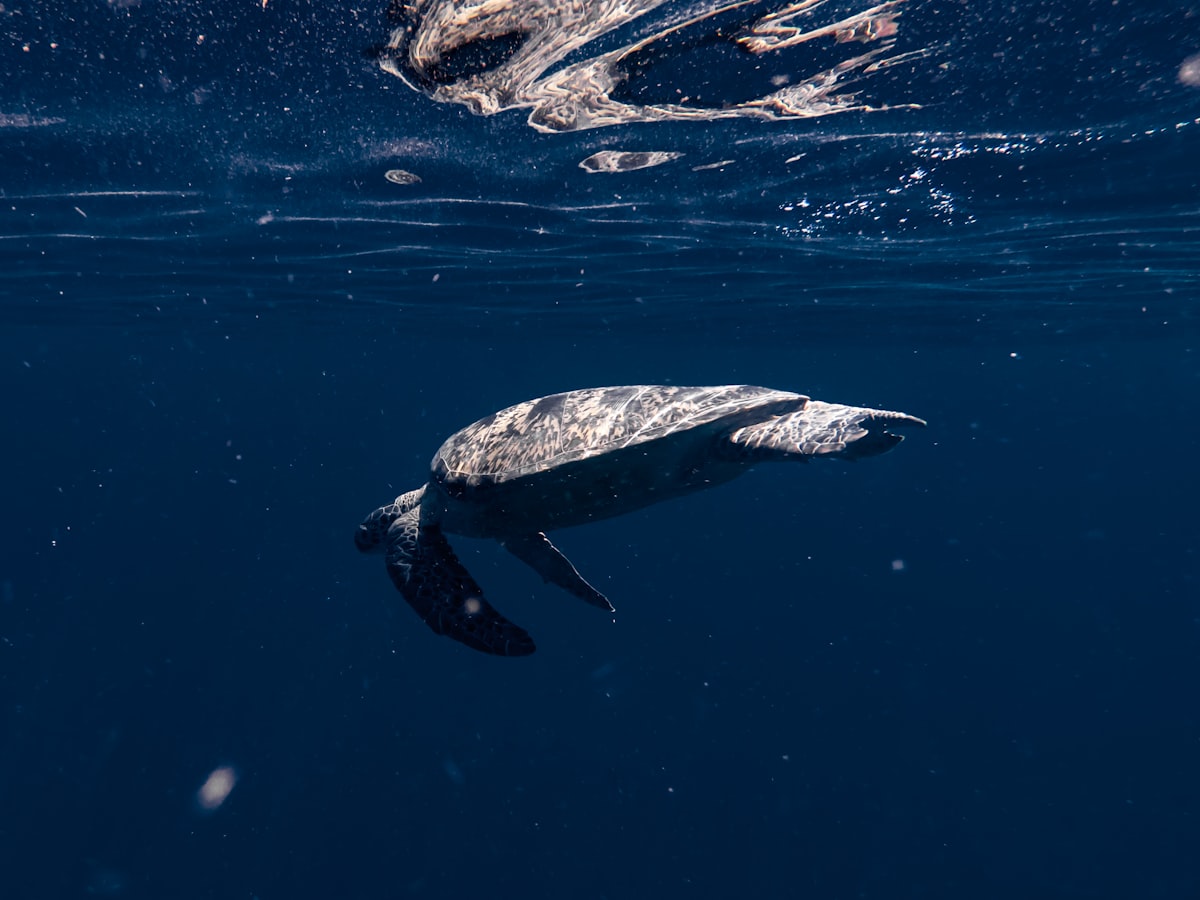
Endangered sea turtles embody one of the most symbolic biodiversity crises of our time. These fascinating animals, which outlived the dinosaurs and have roamed our oceans for more than 100 million years, are now on the brink of extinction because of human activity. Of the seven existing species of sea turtles, six are classified as vulnerable, endangered or critically endangered. 🐢
Endangered sea turtles: portrait of a silent crisis
Sea turtles play a fundamental ecological role in keeping the oceans healthy. Green turtles graze on seagrass meadows, keeping them in good shape and encouraging new growth. Loggerheads eat jellyfish, helping to keep their numbers in check. The leatherback, the largest of them all at 900 kg (nearly 2,000 lb), feeds almost exclusively on jellyfish and helps balance open-ocean ecosystems.
Their disappearance would trigger a cascade of consequences across marine and coastal ecosystems. The beaches where they nest are fertilized by unhatched eggs and shell fragments, nourishing the dune vegetation that stabilizes the coastline. Without sea turtles, whole swaths of ocean biodiversity would be at risk.
Plastic pollution: the number one direct threat
Sea turtles routinely mistake floating plastic bags for jellyfish, their favorite prey. A single piece of swallowed plastic can be enough to block their digestive system completely and condemn them to a slow death. Studies show that more than half of the world’s sea turtles have ingested plastic.
Abandoned fishing nets, the infamous “ghost nets,” trap and drown thousands of turtles every year. This lost or deliberately discarded fishing gear keeps on killing for decades. As we explain in our article on small-scale vs industrial fishing, responsible fishing practices can drastically reduce this accidental bycatch.
Climate change threatens their reproduction
Climate change poses a particularly insidious threat to sea turtles. The temperature of the sand on nesting beaches determines the sex of the embryos: above 29°C (84°F), eggs mostly produce females. As temperatures rise, some beaches now produce 99% females, badly skewing the sex ratio of populations and undermining their long-term ability to reproduce.
Rising sea levels directly threaten nesting beaches, which get swamped during spring tides and storms. The Great Barrier Reef, a vital habitat for Australia’s green turtles, is itself threatened by coral bleaching, a phenomenon amplified by climate change that we cover in detail in our article on coral reefs in danger.
Bycatch and poaching
Sea turtles fall victim to the same bycatch as dolphins and whales. Gillnets, longlines and trawls catch tens of thousands of turtles around the world every year. Technical fixes such as turtle excluder devices (TEDs), grids built into trawl nets that let turtles escape, have existed since the 1980s, but they are still not widely enough adopted worldwide.
Poaching remains a reality in many countries: eggs taken from nesting beaches, shells sold illegally, meat eaten as part of traditional practices. Despite international protection agreements, illegal supply chains persist, fueled by lingering demand in Asia and Latin America.
Protection programs that offer hope
The good news is that sea turtle populations can bounce back if they are given the chance. Programs to protect nesting beaches (night patrols, anti-predator fencing, rules on coastal lighting that disorients hatchlings) have allowed some populations to stabilize or grow.
Florida, home to 90% of loggerhead nesting in the North Atlantic, has adopted strict rules on beach lighting and banned disruptive activities during nesting season. The result: local populations have grown significantly over recent decades.
In Costa Rica, Greece, Turkey and many tropical islands, responsible ecotourism programs let local communities make a living from protecting turtles rather than poaching them, an economic shift that shows how responsible tourism can become a conservation tool.
What you can actually do
A few simple habits can help protect sea turtles. Never collect eggs on beaches, don’t disturb females nesting at night, switch off lights visible from the beach during nesting season, and pick up plastic litter on beaches and in the water: every action counts.
Support organizations such as Oceana, France’s Nicolas Hulot Foundation or local nesting-beach protection programs, choose certified tour operators for turtle watching, and avoid sea turtle products when traveling abroad: protecting these extraordinary animals is everyone’s business. The fight against plastic pollution is also directly tied to their survival.