
The question of small-scale vs industrial fishing lies at the heart of the debate over the future of our oceans. When we think of fishing, we often picture a fisherman with his small boat and nets. The global reality is very different: two worlds coexist, with radically opposite impacts on ocean health and on the human communities that depend on it. Understanding these differences is essential to making informed choices as a consumer. 🎣
Small-scale fishing: guardian of marine resources
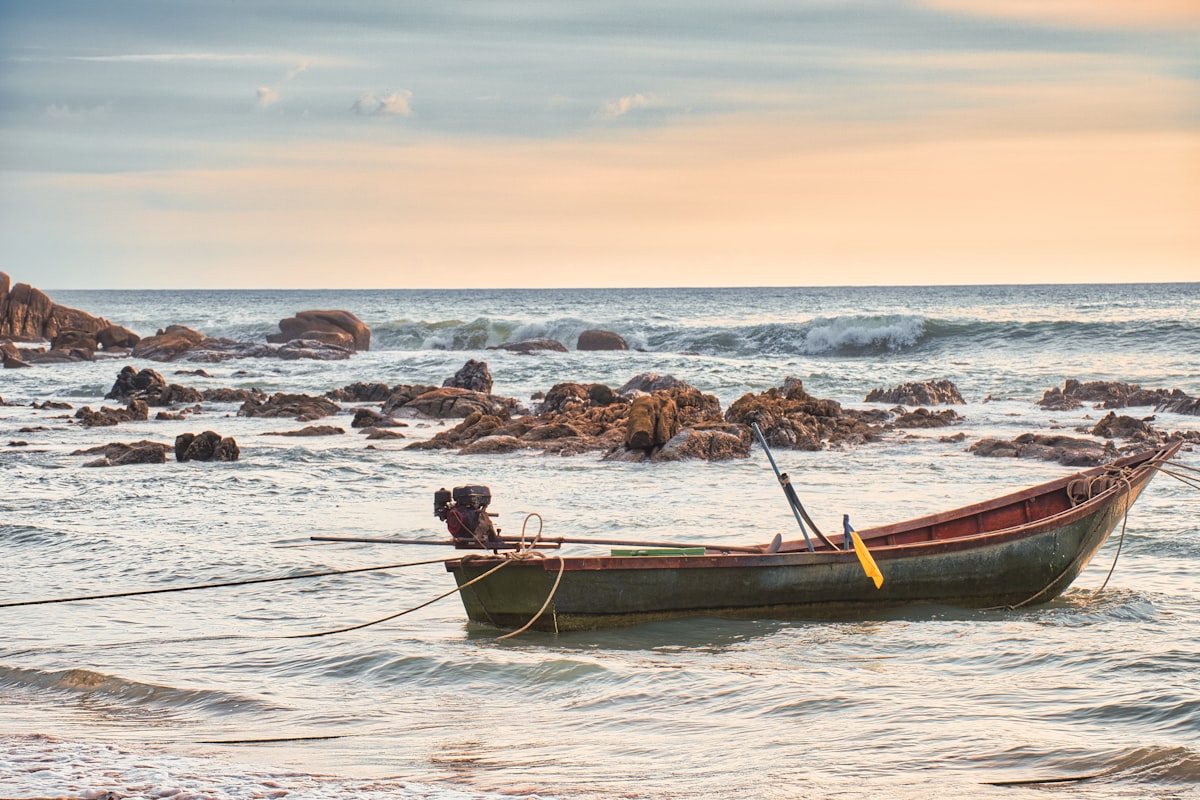
Small-scale fishing, also known as artisanal or coastal fishing, accounts for 90% of the world’s fishers, some 120 million people, most of them in developing countries. These fishers use light boats and selective gear (handlines, longlines, traps, small nets), and they work close to shore in waters they have known intimately for generations.
Its environmental impact is incomparably lower than that of industrial fishing: less bycatch thanks to selective gear, no destruction of the seabed, minimal fuel use, and a close relationship with the local ecosystem that naturally encourages its preservation. Small-scale fishers often have a direct stake in the sustainability of the resources their daily livelihood depends on.
Industrial fishing: efficiency at the ecosystem’s expense
Industrial fishing relies on large vessels equipped with advanced technology: sonar to detect schools of fish, precision GPS, giant nets, bottom trawls and purse seines. A single factory ship can catch in one day what an entire village of small-scale fishers lands in a whole season.
Bottom trawling is especially destructive to the oceans. By scraping the seafloor several hundred meters down, it physically destroys habitats (deep-sea corals, seagrass meadows, spawning grounds, rocky structures) that take decades to recover. Some scientists compare its ecological impact to clear-cutting tropical rainforests. Bycatch (turtles, dolphins, sharks and non-target species) can make up as much as 40% of the total catch.
A paradoxical economic imbalance
Despite its catastrophic ecological footprint, industrial fishing benefits from massive public subsidies, estimated at around $22 billion a year in “harmful” subsidies, according to a study published in the journal Nature in 2021. Without this government support, much of industrial high-seas fishing simply wouldn’t be profitable.
Meanwhile, small-scale fishers, who directly feed billions of people, create more jobs per ton of fish caught and have a far smaller ecological impact, receive less than 10% of global public fishing aid. This imbalance has been denounced by international bodies such as the UN Food and Agriculture Organization (FAO) and by many environmental NGOs.
Sustainable certification: an imperfect but useful tool
The MSC (Marine Stewardship Council) label aims to identify sustainable fisheries, whether small-scale or industrial. Although imperfect, and criticized by some for not being strict enough, it remains a useful guide for consumers. Stricter labels, such as France’s “Pêche Durable” (Sustainable Fishing) ecolabel or certifications for local small-scale fisheries, offer additional guarantees.
How to eat seafood responsibly
As a consumer, you have real power over the future of our oceans. Buying directly from local fishers or at coastal markets guarantees freshness and supports the local economy. Choosing MSC-certified fish from sustainable fisheries sends a strong economic signal. Varying the species you eat (we mostly eat around 10 species when hundreds are available) eases the pressure on the most heavily exploited stocks. And eating less seafood overall remains the most effective way to preserve ocean resources.
Read also : Sustainable Seafood: How to Choose It and Decode MSC, ASC, and Organic Labels