
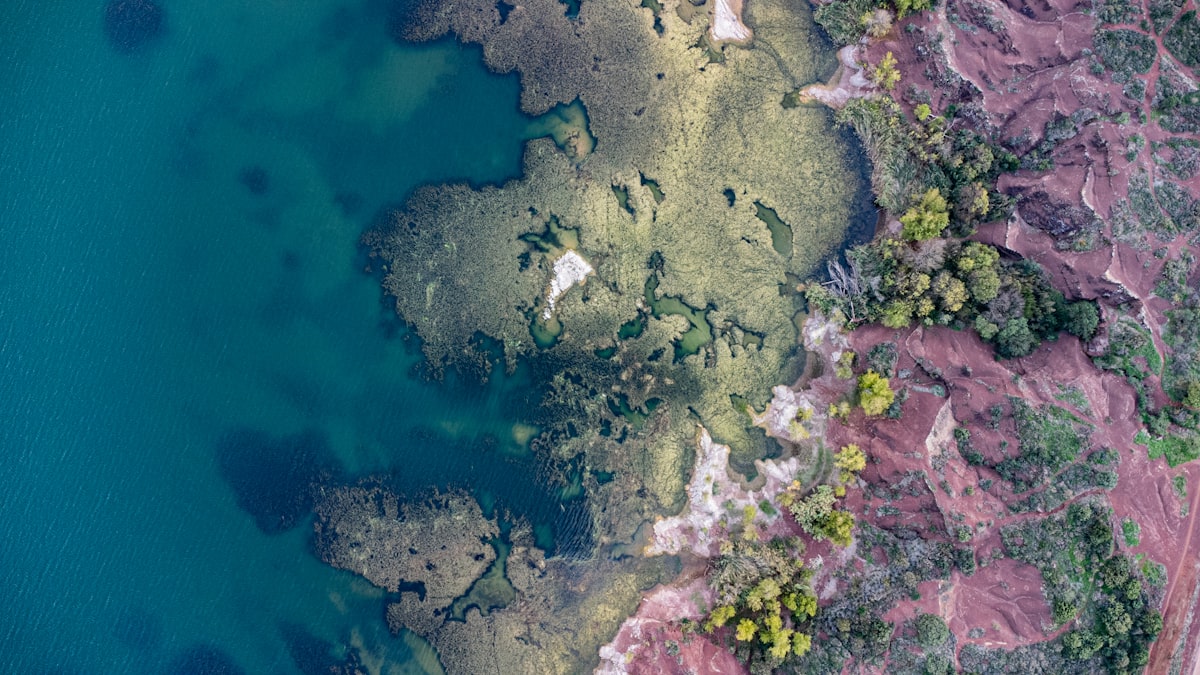
At the mouths of many of the world’s great rivers, ocean dead zones are spreading at an alarming pace. These oxygen-starved stretches of sea, where virtually all life has vanished, are one of the most visible consequences of intensive farming on ocean health. In 2023, scientists counted more than 700 of them worldwide — up from just 49 in the 1960s. 💀
What is an ocean dead zone?
An ocean dead zone, or hypoxic zone, is a coastal or marine area where dissolved oxygen is so low (under 2 mg per liter) that most marine organisms cannot survive there. Fish flee en masse to better-oxygenated waters. Sessile species — corals, mollusks, worms, echinoderms — die where they are, unable to move. What remains is an underwater desert littered with carcasses, silent and desolate.
In the most severe cases, hydrogen sulfide bubbles up from oxygen-free sediments — a toxic gas that finishes what hypoxia started, creating absolute “dead zones” where even aerobic bacteria cannot survive.
The central role of intensive agriculture
The mechanism is well documented by science. The nitrogen and phosphorus fertilizers used heavily in modern farming wash into streams when it rains, and rivers carry them all the way to the sea. This sudden, massive influx of nutrients triggers an explosive bloom of microscopic algae at the water’s surface — a process called eutrophication.
When these algae die, the bacteria that decompose them use up the dissolved oxygen in the water column. Within weeks, hypoxia sets in in the deeper layers. Winds and currents can make things worse by preventing surface waters from reoxygenating the depths. The result: the slow suffocation of the entire seafloor ecosystem.
Dramatic examples around the world
The Gulf of Mexico dead zone, fed by the Mississippi River as it drains the vast farm belt of the U.S. Midwest (corn and soybeans, heavily dosed with nitrogen fertilizer), is one of the largest and best documented in the world. It can reach 22,000 km² (8,500 sq mi) in summer — roughly the size of New Jersey. Every year it wipes out millions of dollars’ worth of fishery resources and directly threatens Louisiana’s shrimp and crab fisheries.
In Europe, the Baltic Sea suffers from chronic hypoxia, worsened by decades of agricultural runoff from across Northern Europe. The Black Sea, the Gulf of Oman and many coastal areas of China and Korea are also hit by increasingly frequent and intense hypoxic events.
The good news: dead zones can recover
The Black Sea saw a spectacular recovery in the 1990s, after the collapse of intensive Soviet agriculture and a drastic drop in fertilizer use. Its dead zones shrank significantly, and fish species absent for decades came back. It’s proof that nature can bounce back when given the chance.
Better farming practices can significantly cut the flow of nutrients to the sea: winter cover crops to limit leaching, grass buffer strips along waterways, carefully reduced fertilizer doses, organic farming, and restoring wetlands that naturally filter nutrients before they reach the sea.
The link between our plates and ocean health
What we eat has a direct impact on ocean dead zones. Eating less meat — whose production relies heavily on nitrogen fertilizers to grow feed crops — choosing organic or local products from less intensive farming, and supporting EU Common Agricultural Policy (CAP) measures that reward good practices: the fate of the ocean’s dead zones is also decided, perhaps above all, by our everyday food and political choices.