
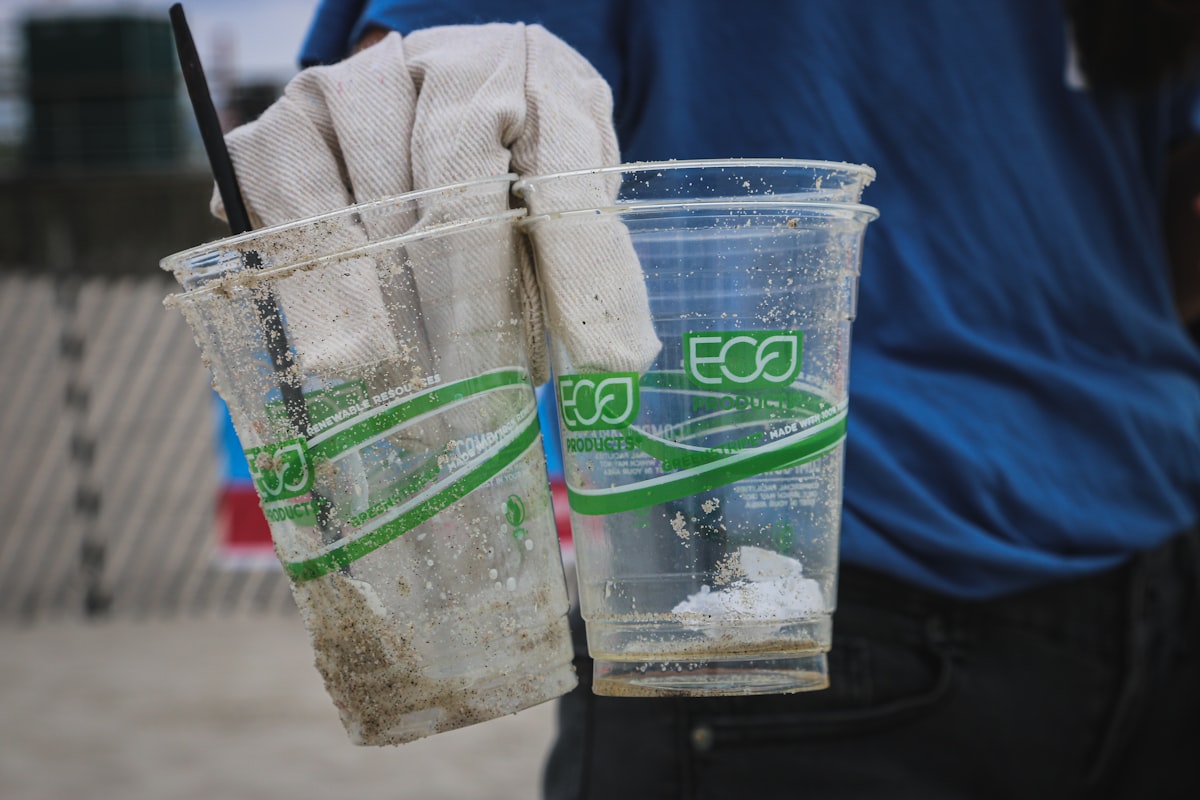
Biodegradable plastics and the oceans: few topics stir up as much hope and skepticism at the same time. In the face of the plastic disaster engulfing our seas, bioplastics and biodegradable plastics look like an appealing fix. But the reality is far more complicated, and scientists are sounding the alarm about the misconceptions surrounding these materials. 🔬
Biodegradable plastics and the oceans: separating fact from fiction
When it comes to plastics, “biodegradable” is one of the most misunderstood words around. A biodegradable material breaks down through the action of microorganisms, but that process requires specific conditions: the right temperature, moisture, oxygen and the right microbes. Those conditions are very rarely found in the marine environment, which fundamentally undermines the usefulness of biodegradable plastics for protecting the oceans.
“Compostable” plastics, often marketed as the most virtuous option, are designed to break down in industrial composting conditions (high temperatures, controlled humidity, specific microorganisms). In a cold, salty ocean exposed to UV light, these materials can take years or even decades to decompose, and in the meantime they do the same damage to marine wildlife as conventional plastic.
What the science says about breakdown at sea
Independent studies have tested how different types of biodegradable plastics behave in real marine conditions. The results are generally disappointing. A 2019 study published in Environmental Science & Technology submerged various “biodegradable” bags in the sea and found them practically intact after a year underwater. Another study showed that some “oxo-degradable” plastics, which contain additives meant to speed up their fragmentation, broke down into microplastics faster than conventional plastic, potentially making microplastic contamination worse.
The scientific community is now almost unanimous: oxo-degradable plastics are a particularly dangerous false solution, and the European Union has banned them. For compostable bioplastics, the picture is more nuanced: they can make sense for organic waste where collection and composting systems are well developed, but they are no answer to marine plastic pollution.
The real alternatives to conventional plastics
If biodegradable plastics aren’t a silver bullet for the oceans, what alternatives actually exist? The hierarchy of solutions is well established in circular economy principles: first reduce the amount of plastic produced, then reuse, and recycle only as a last resort.
For some uses, naturally biodegradable materials offer genuine alternatives. Paper and cardboard for dry food packaging. Glass for reusable containers. Wood and bamboo for utensils with a long enough lifespan. Natural fibers (cotton, linen, jute) for bags and textile packaging. When these materials end up in nature or at sea, they really do break down within a reasonable time frame, without leaving behind persistent toxic microparticles.
Marine bioplastics: a promising lead
One genuinely promising line of research is marine bioplastics: materials designed specifically to break down in ocean conditions. Researchers are developing plastics made from algae, chitin (the material in crustacean shells) or marine bacteria that produce polyhydroxyalkanoates (PHAs), biopolymers that actually degrade in seawater within a few months.
These materials are still at an early stage of development, and they cost far more to produce than conventional plastic. But they represent a research direction grounded in the reality of marine environments, unlike land-based bioplastics that are being reformulated to work in very different conditions. As we discuss in our article on green marine technologies, plastic-eating enzymes offer another complementary avenue.
The danger of greenwashing
The confusion around biodegradable plastics is largely fueled by greenwashing from manufacturers who use misleading labels and environmental claims to sell products that represent no real progress. Terms like “eco-friendly,” “bio-based,” “degradable” or “environmentally friendly” are all too often slapped on products whose real impact on the oceans is the same as, or worse than, conventional plastic.
The best way to avoid being fooled is to focus on cutting waste at the source and reusing, rather than believing that a “biodegradable” plastic can be thrown away without consequences. Cutting back on plastic remains the most effective thing you can do to protect the oceans, however sophisticated the alternative materials the industry offers.
Conclusion: biodegradable plastics, a false solution to a real problem
Biodegradable plastics are not the solution to ocean plastic pollution, at least not at their current stage of development and without suitable waste management systems. They may have a place in a broader strategy to reduce plastic’s impact, for specific uses and with effective collection systems. But presenting bioplastics as a direct replacement for conventional plastic to protect the oceans is a dangerous illusion that distracts from the real solutions: reduction at the source, reuse and ambitious international regulation of plastic production.