
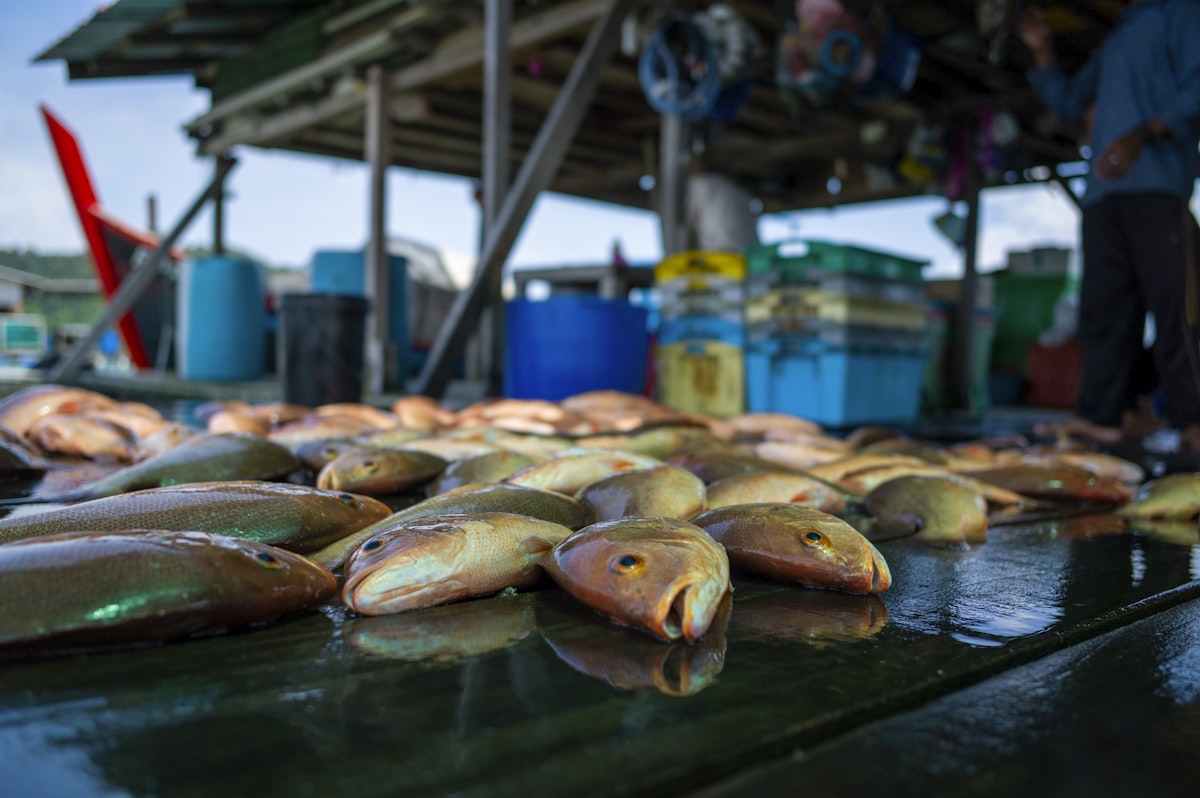
Microplastics in fish have become one of the most pressing health concerns of our time. Whatever we dump into the oceans ends up on our plates — and microplastics are no exception. Recent studies have found plastic particles in nearly every fish and seafood sample tested around the world, raising legitimate questions about the risks to human health. 🐠
Microplastics in fish: a widespread contamination
Microplastics — plastic particles smaller than 5 mm (0.2 in), often invisible to the naked eye — have invaded every marine ecosystem, from surface waters to the deepest abyss. Marine organisms swallow them by mistaking them for plankton, or absorb them directly from the water. Once inside a fish, microplastics can build up in its tissues, organs and digestive tract.
Studies of fish markets in Europe, the Americas and Asia have found microplastics in a wide range of species: sardines, anchovies, tuna, hake, shrimp, mussels and oysters. Bivalves such as mussels and oysters, which filter huge volumes of water to feed, are especially contaminated. As we explain in our article on plastic pollution, around 8 million metric tons of plastic enter the oceans every year.
How microplastics enter the food chain
Microplastics in the ocean come from several sources. Macroplastics (bottles, bags, nets) gradually break down under UV light, waves and abrasion into ever-smaller particles. Microbeads used in some cosmetics and cleaning products are flushed straight into wastewater. Synthetic fibers shed when washing polyester, nylon or acrylic clothing — up to 700,000 fibers per wash — slip through wastewater treatment plants and end up in rivers and seas.
Once in the water, microplastics are ingested by phytoplankton and zooplankton, the foundation of the marine food chain. From there they climb the food web through bioaccumulation: small fish eat contaminated plankton, bigger fish eat the small fish, and we eat the bigger fish. The higher a species sits in the food chain, the more microplastics it is likely to concentrate — and great whales and dolphins are among the hardest hit.
The risks to human health
Scientists are still investigating the health risks microplastics pose to humans, but the early findings are worrying. Several recent studies have detected microplastics in human blood, lungs, placentas and stool. The tiniest particles — nanoplastics — can cross cell membranes and accumulate in organs.
The potential risks fall into two categories. First, the plastic particles themselves can trigger inflammation and oxidative stress in cells. Second, plastics act like chemical sponges, soaking up and concentrating persistent pollutants found in seawater — PCBs, PAHs, pesticides, endocrine disruptors — which they can release into the human body once swallowed. Current exposure levels are considered low, but the long-term effects of chronic exposure remain poorly understood.
Which fish are the most contaminated?
Contamination varies widely depending on the species, the fishing grounds and which parts of the fish we eat. Filter feeders such as mussels and oysters are among the most contaminated — but also among the most closely monitored in developed countries, which enforce strict health checks. Pelagic species (which live in open water) are generally less contaminated than bottom-dwelling ones. Fish caught near urbanized and industrial coastlines are more exposed than those caught offshore.
One key point: the parts you eat matter a lot. Microplastics concentrate mainly in a fish’s digestive system — which is usually removed before larger species go on sale. For small fish eaten whole (sardines, anchovies, smelt), exposure is more direct.
How to limit your exposure
A few habits can reduce your dietary exposure to microplastics. Choose wild offshore fish over coastal farmed fish. Eat gutted fish. Vary the species you eat rather than sticking to a few popular ones. Rinse shellfish thoroughly before eating. Cut back on highly processed seafood (surimi, fish sticks), which may mix in more contaminated parts.
But the real solution lies upstream: reducing the amount of plastic entering the oceans. Cutting back on single-use plastic, sorting your waste better, using a laundry bag for synthetic clothes: every action helps reduce plastic contamination in the oceans and, ultimately, in our food.
The urgent need for international regulation
Faced with such widespread contamination, scientists and NGOs are calling for binding international rules on plastic production and management. The global plastics treaty now being negotiated at the United Nations could set production standards, ban the most problematic plastics and impose recycling obligations — measures that, if adopted and enforced, could significantly cut the flow of plastic into marine ecosystems over the coming decades.