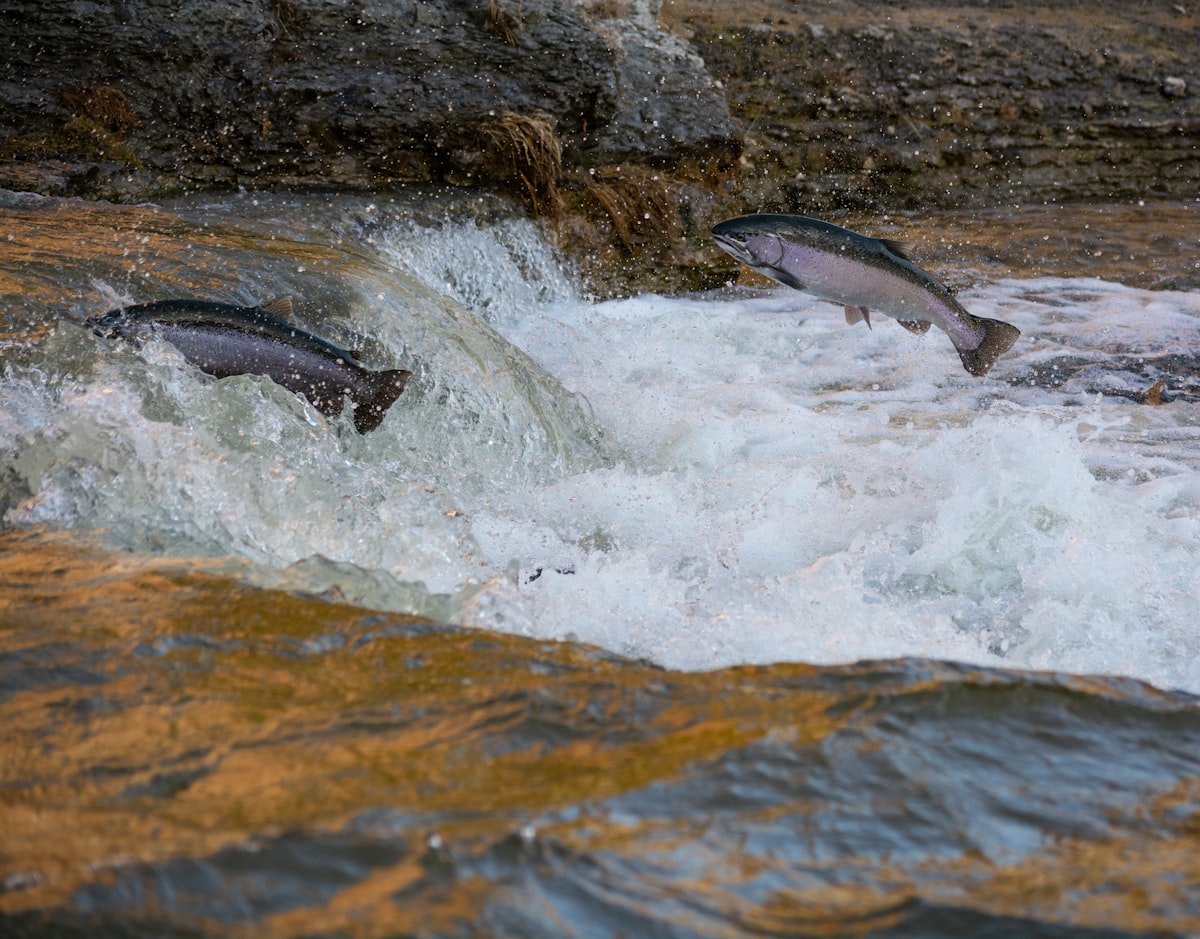
Freshwater fishing and migratory fish are at the heart of a quiet but dramatic crisis. Salmon, eels, sturgeon, shad, lampreys: these iconic species, which make extraordinary journeys between rivers and the ocean, have lost more than 76% of their global populations since 1970, according to WWF’s Living Planet Report. It’s a collapse that gets far less media attention than marine crises, yet its ecological consequences are enormous. 🐟
Freshwater fishing and migratory fish: a double squeeze
So-called “diadromous” migratory fish spend part of their lives at sea and part in fresh water. “Anadromous” species such as salmon hatch in rivers, migrate to the sea to grow, then return to their rivers to spawn and die. “Catadromous” species such as eels do the opposite: they hatch at sea (in the Sargasso Sea, for the European eel) and live in rivers before heading back to the ocean to breed.
These species face a double squeeze: they are vulnerable both at sea (overfishing, pollution, climate change) and in fresh water (dams, pollution, fishing). It is this vulnerability across their entire life cycle that explains the scale of their decline.
Dams: impassable barriers
Hydroelectric dams and irrigation weirs are the most direct obstacles to fish migration. A salmon swimming back up its home river to spawn can be stopped cold by a dam without a working fish ladder, doomed to die before it can reproduce. Thousands of rivers in Europe and North America are fragmented by hundreds of thousands of such structures, which break up ecological continuity.
The good news is that removing obsolete or unprofitable dams is gaining ground, with spectacular results for returning migratory fish. On the Élorn River in Brittany, in northwestern France, tearing down several weirs allowed Atlantic salmon and sea lampreys to return after decades of absence. In the United States, the removal of the Klamath River dams in California and Oregon — the largest dam removal in American history — has already shown encouraging signs of returning salmon.
The sturgeon: a living fossil on the brink of extinction
The sturgeon is one of the most striking examples of the migratory fish crisis. Dating back more than 200 million years, it is often called a “living fossil.” France is home to the last population of European sturgeon (Acipenser sturio) left in Western Europe — in the Garonne and Dordogne rivers — but it is so small that it’s considered functionally extinct in the wild.
Reintroduction programs run by INRAE, France’s National Research Institute for Agriculture, Food and the Environment, and the Nouvelle-Aquitaine regional council release thousands of young sturgeon into the Garonne every year. The first fish from these programs are starting to show up at sea, a sign that captive breeding is working. But rebuilding a viable wild population will take decades, and requires strict protection from accidental catch along with better water quality and river connectivity.
Freshwater overfishing: a blind spot in conservation policy
Freshwater fishing is often less regulated and less monitored than sea fishing. In many countries, recreational and commercial freshwater fishing takes place without strict quotas on species that are already struggling. The fishery for glass eels (juvenile eels), as we discuss in our article on the illegal trade in marine species, epitomizes this governance gap.
Freshwater poaching — illegal electrofishing, unauthorized nets, night fishing — also takes a toll on already fragile populations. Species that were once common, such as shad and lampreys, have all but vanished from rivers where they still thrived in the early 20th century.
Climate change: yet another threat
Climate change is amplifying the pressures on migratory fish. Rising summer river temperatures now exceed the thermal tolerance of Atlantic salmon in many French and Spanish rivers. Increasingly severe summer low flows can halt migrations at obstacles that would be passable under normal conditions. Shifts in the water cycle scramble the environmental cues that trigger migration.
Out at sea, changes in the distribution of plankton and salmon prey are disrupting migration routes and growth. Together, these land and ocean pressures create a “corridor of death” that few fish survive long enough to spawn.
Solutions that work
Serious as the situation is, proven solutions exist. Restoring river continuity by removing dams or installing effective fish passes is the single most effective measure. Improving water quality by cutting agricultural and urban pollution is essential. Strict fishing rules — moratoriums, quotas, seasonal bans — allow populations to recover as long as their habitats are protected. And the involvement of recreational anglers, organized into federations, in monitoring and protecting rivers is a valuable asset for conserving migratory species.