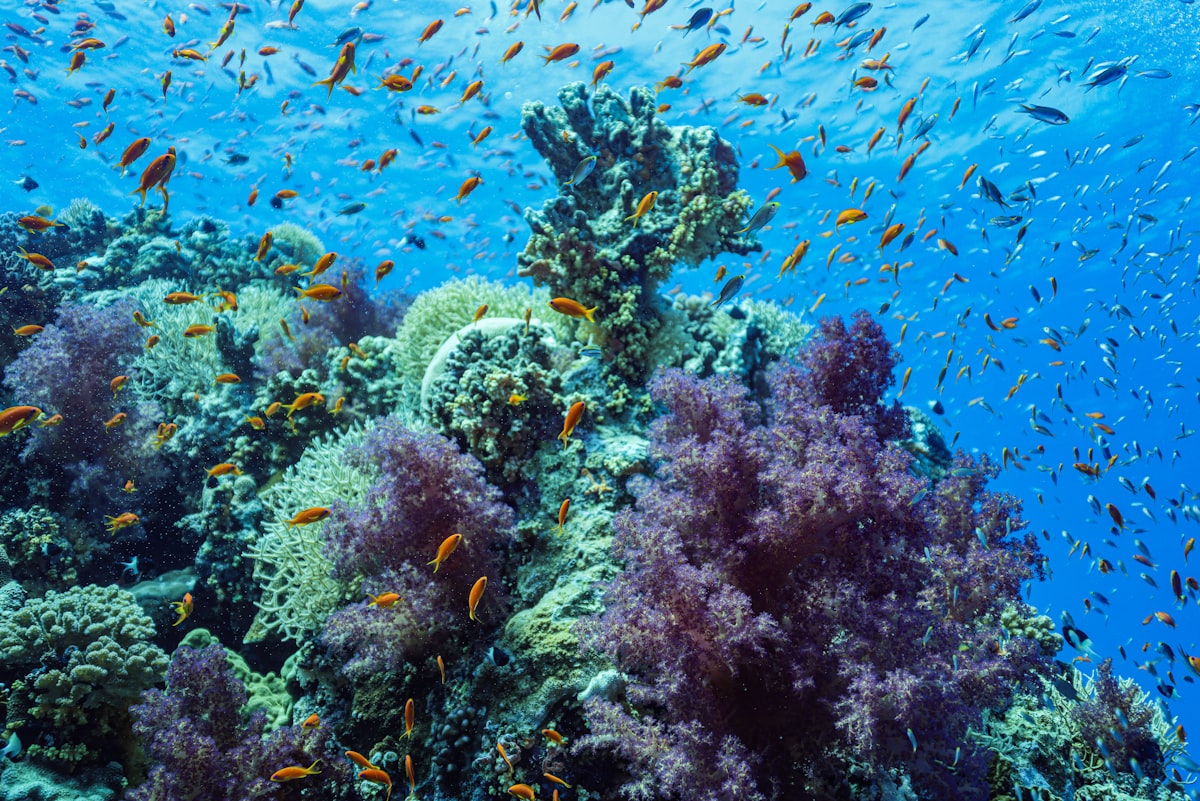
Responsible scuba diving is essential for anyone who wants to discover the wonders of the underwater world without contributing to its decline. Every year, millions of divers and snorkelers explore the seabed around the globe, and their cumulative impact on marine ecosystems, coral reefs in particular, can be considerable if they don’t take precautions. 🤿
Responsible scuba diving: why it matters
Diving is often presented as a way to discover nature, supposedly with less impact than other pastimes. But the reality is more nuanced. Done badly, diving can cause significant damage: a diver who accidentally brushes against a coral can kill a colony that took decades to form. Fins scraping the bottom can destroy fragile biological structures. Thousands of divers crowding the same site can gradually degrade entire ecosystems.
As we explain in our guide to responsible seaside travel, coastal tourism has a direct impact on coral reefs and other marine ecosystems. Responsible diving starts with being aware of that impact and genuinely wanting to minimize it.
Buoyancy: the key skill for responsible diving
Mastering neutral buoyancy is the single most important skill for a responsible diver. A diver who is properly weighted, neither too light nor too heavy, doesn’t need to lean on coral or the seabed to stay steady. They don’t kick up clouds of sediment that smother organisms fixed to the bottom. And they’re far less likely to bump into fragile structures with their fins.
Before diving at sensitive sites (coral reefs, sandy bottoms with seagrass), it’s a good idea to practice your buoyancy in less fragile environments. Many dive centers offer eco-diving courses that focus on these control skills.
Touch nothing, take nothing, leave nothing
The golden rule of responsible diving comes down to three absolute don’ts. Never touch marine life: corals, sponges, fish, turtles, rays. Beyond the physical damage, human contact can pass pathogens to marine organisms and disrupt their natural behavior. Never take anything (shells, coral, sand), even if it’s dead or seemingly abandoned. Never leave any trash underwater.
Not feeding the fish is just as fundamental. This practice, still commonly offered by some dive centers to “enhance” the tourist experience, seriously disrupts species’ natural feeding behavior, favors opportunistic species over others, and can make fish aggressive toward divers.
Sunscreen: an unsuspected enemy of reefs
The chemical UV filters found in most conventional sunscreens, such as oxybenzone and octinoxate, are highly toxic to corals at tiny concentrations. Studies have shown that these substances cause coral bleaching and disrupt the development of coral larvae. In the shallow waters of popular snorkeling and diving spots, concentrations can reach problematic levels during peak tourist season.
The solution is simple: choose mineral sunscreens labeled “reef safe,” made with non-nano zinc oxide. Wearing a rash guard or a light wetsuit also greatly reduces the amount of skin you need to protect, and therefore the amount of sunscreen you need. This precaution, which we discuss in our article on sustainable coastal tourism, is especially important in coral reef areas.
Choosing a responsible dive center
Your choice of dive center or snorkeling operator is crucial for a responsible experience. Green Fins certification (run by The Reef-World Foundation and the UN Environment Programme) and PADI’s Pro Earth program identify centers committed to eco-friendly practices: systematic environmental briefings, limits on the number of divers per site, buoyancy training, a reef-safe sunscreen policy and participation in site cleanups.
Asking the center how it handles its waste (tanks, worn-out gear), whether it takes part in local ecosystem monitoring programs (coral watch, fish counts) and whether it uses moorings that protect seagrass beds are good ways to gauge its real commitment.
Citizen science: diving to support research
Responsible diving can go beyond simply minimizing your impact: it can become an active tool for protecting the oceans. Citizen science programs let amateur divers help monitor marine ecosystems: Coral Watch (tracking coral health), iNaturalist (identifying and geotagging species), WWF fish-count programs. These citizen contributions give scientists valuable data on areas they could never monitor on their own. Diving thus becomes an act of active conservation.