
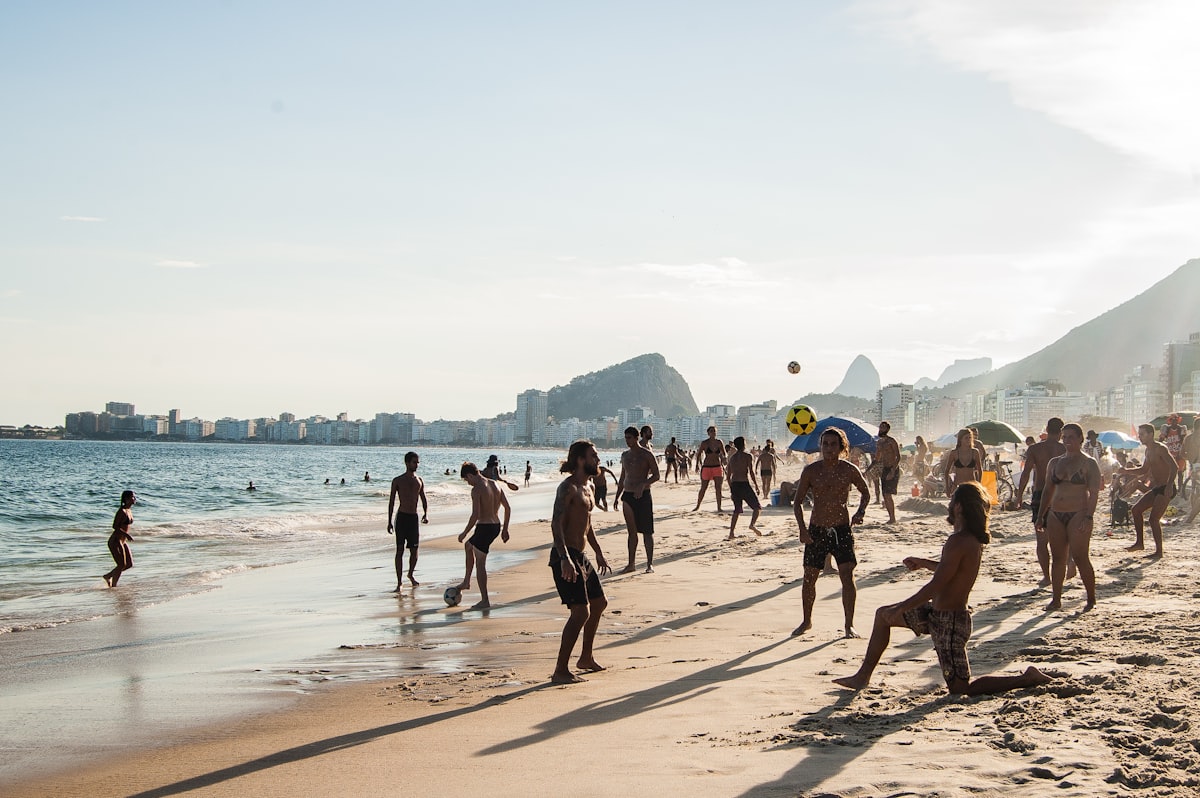
The oceans and mass tourism share a paradoxical relationship: tourists are drawn by the beauty of the coastline, yet their sheer numbers help destroy it. Every summer, millions of vacationers flock to Mediterranean, Atlantic and tropical shores around the world, putting growing environmental and social pressure on fragile ecosystems. 🏖️
The oceans and mass tourism: the beach destination paradox
Seaside tourism accounts for a huge share of global tourism — around 80% of leisure trips involve the coast in some way. Coastal areas welcome billions of tourists every year, generating significant income for the regions involved. In France, the coastline accounts for 40% of the country’s tourism activity. The Mediterranean basin is the world’s top tourist destination, with more than 300 million visitors a year.
This influx puts pressure on coastal ecosystems on many fronts: trampled dunes and seagrass beds, water polluted by sewage discharges, light pollution that disorients nocturnal species, noise that disturbs marine wildlife, a spread of infrastructure that seals soils and paves over the shoreline, and overuse of fresh water in areas often already short of it.
The impact on marine and coastal biodiversity
Coastal ecosystems are among the richest and most fragile on the planet. Coastal dunes, transitional ecosystems between land and sea, are especially threatened by tourist foot traffic. Their vegetation, adapted to extreme conditions, is destroyed by millions of footsteps, leaving the sand exposed to wind and wave erosion. In France, 30% of the coastline is eroding, a problem made worse by the destruction of dunes.
Mediterranean Posidonia seagrass meadows suffer from careless anchoring by pleasure boats — a single anchor can rip up dozens of square meters of seagrass in one night. These meadows, which serve as crucial fish nurseries and carbon sinks, grow back at a glacial pace — less than one centimeter (0.4 in) a year. As we explain in our article on responsible coastal tourism, a few simple habits can minimize this impact.
Overtourism: when destinations become victims of their own success
Some coastal destinations have fallen victim to their own popularity. Maya Bay in Thailand, made famous by the Leonardo DiCaprio film “The Beach,” was receiving up to 6,000 tourists a day before it was forced to close in 2018 to let its corals recover. The Greek islands of Santorini and Mykonos, the island of Bali, the beaches of Barcelona and some islands in the French Mediterranean face similar summer overtourism that far exceeds what their ecosystems can bear.
The temporary closure of Maya Bay and its spectacular results — marine wildlife returning, corals regenerating — proved that degraded areas can bounce back quickly if human pressure is cut enough. That success has inspired other destinations to introduce rotation schemes or access limits.
Innovative solutions for sustainable coastal tourism
To meet these challenges, innovative solutions are emerging around the world. Capping visitor numbers is the most directly effective measure: several marine protected areas and coastal nature parks have introduced advance booking systems and daily quotas that keep visitor numbers within what ecosystems can handle.
Diversion tourism means developing activities and attractions inland to take pressure off the most sensitive coastal sites. Marketing campaigns that showcase lesser-known, less crowded destinations help spread tourist flows more evenly.
Environmental taxes — tourist taxes earmarked for nature conservation, fees to access protected sites — fund the management and restoration of degraded ecosystems while sending a price signal that can curb overtourism. The Balearic Islands, for example, have introduced a tourist tax, part of which goes to protecting natural areas.
The role of tourists themselves
Beyond public policy, individual tourist behavior is crucial. Avoid destinations suffering from overtourism during peak periods, travel off-season, follow local environmental rules to the letter, contribute financially to the conservation of the places you visit, and practice responsible diving and snorkeling: multiplied by millions of visitors, these habits can make a real difference in preserving coastlines.
Tourism doesn’t have to be destructive. Practiced mindfully and within what ecosystems can handle, it can even become a driver of conservation, generating income that justifies and funds the protection of coastal natural areas.